

Been in an accident or suffered property damage?
Reporting a motor incident or property damage is simple at QMT Commercial Insurance Brokers. Thanks to our trusted partnership with iRevolution Claims, you’ll have 24/7 access to the claims line. They’ll listen to your account and promptly notify your insurer, keeping the process as smooth and stress-free as possible.
Simply call us on 01227 285 540, Option 2
Contact us Call usFor non-motor claims (excluding property)
Please notify your insurer’s claims team directly. You can usually find their details on your schedule or policy wording.
Remember, if you need any support, our Client Relationship Team are here for you. Just call 01227 285 540 or email admin@qmtcommercial.co.uk and we’ll be happy to point you in the right direction.
Here to help
with claims
At QMT Commercial, we know that making a claim can feel overwhelming – but it doesn’t have to be.
Whether it’s a bump in the road, a break-in or something bigger, we’re here to support you, with a range of helpful resources to guide you through what to do in the event of an incident.
24/7 claims support
Emergencies don’t wait for office hours. The iRevolution motor and property claims line is open around the clock, every day of the year, including bank holidays.
A useful claims toolkit
When something goes wrong, it’s not always easy to think clearly. That’s why QMT Commercial provides clients with easy-to-use claims tools and resources.
Inbox insurance insights
We share helpful claims information straight to your inbox - so you’re always in the know. Don’t miss out - check you’re subscribed to our emails today.
Follow for more tips
Explore our social media and blogs for practical claims advice, with top tips for reducing risk, preventing claims and keeping your premiums in check.
| Policy compliance | Know your reporting deadlines - delays may lead to a denied claim if they hinder investigation. |
| Memories fade | Reporting promptly helps to ensure your insurer gets accurate details to assess the claim fairly. |
| Time matters | The earlier you report a claim, the faster it can be assessed, which could help prevent costs escalating. |
| Protect evidence | Dashcam and CCTV footage can be lost or overwritten - early reporting preserves vital evidence. |
| A head start | Don’t wait for the third party - delays may prevent your insurer from managing their costs effectively. |
| Minimise costs | Claim delays can increase costs and prolong processes like subrogation (recovering of funds). |
The importance of reporting claims promptly
Prompt claim reporting isn’t just good practice – it’s often a requirement of your policy. Many insurers set specific timeframes for notification after an incident. Acting quickly helps prevent delays and ensures key details and evidence are captured accurately.
Take a look at the table opposite to see why it’s so important to report claims as soon as it is safe to do so.
Here's what to do when a collision occurs
Quick actions that make a big difference
Being involved in a motor incident – whether minor or major – can be stressful and overwhelming. Here’s some steps you can follow to help you stay calm, safe and in control.
Turn off your engine and put on your hazard lights. Make sure you are in a safe place before exiting your vehicle. If it is safe and possible to do so, get to the roadside out of the traffic.
If someone is hurt or non-responsive, call 999 immediately for assistance. You should also contact the police within 24 hours if there are minor injuries or you cannot swap details at the scene.
Note the date, time, location, road conditions, weather conditions and the circumstances of the incident.
Take photographs of the vehicle positions and damage to both vehicles if safe to do so (if this is not possible, draw a diagram).
Exchange details with the third party – name, address, telephone number, vehicle registration and insurer – double check the details are correct before leaving the scene and never admit liability.
Check for witnesses. Did anyone see it happen who will be willing to provide you with their details? If so, get a name, phone number and email address from as many witnesses as possible.
If you or a witness captured dashcam footage, save or request a copy immediately. Also check for nearby CCTV cameras that could support your account of the incident.
Call the motor claims line on 01227 285 540 (option 2), as soon as it is safe to do so. There’s no need to call your insurance company as our trusted partners at iRevolution Claims will notify them with an initial report on your behalf.
Report a motor or property claim anytime: 01227 285 540 (option 2)
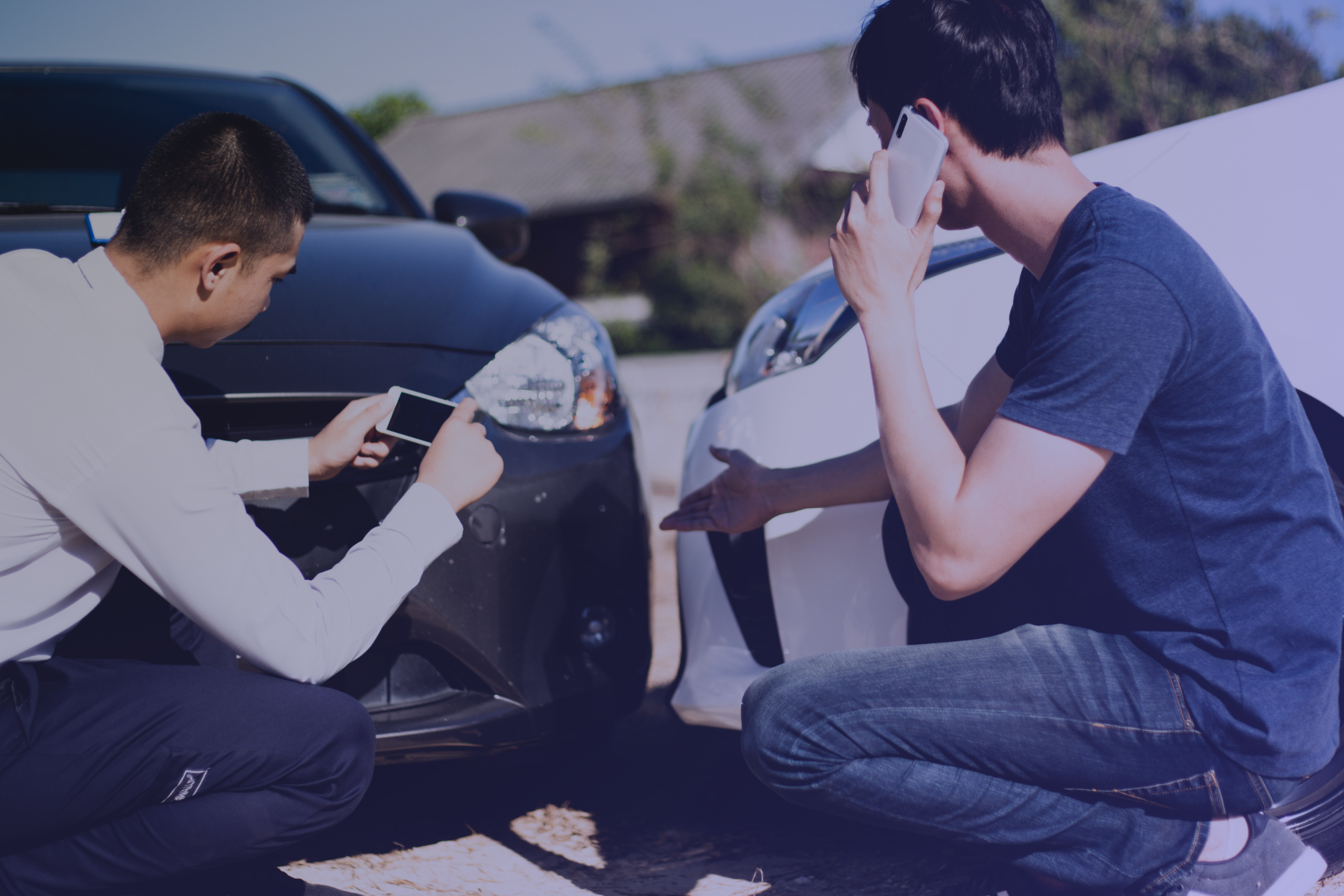
Your QMT Commercial claims toolkit
Navigating the aftermath of an incident can be daunting – but with the QMT Commercial Claims Toolkit, you’re never alone. We’ve created practical guides and easy-to-follow checklists to help you stay calm, take the right steps and protect your insurance position.
Motor accident form
Keep printed or editable digital copies on hand to help quickly record key details if an accident occurs.
Download our motor accident form (PDF)
Download our motor accident form (Word)
What to do in the event of a motor accident guide
Our guide to keeping calm, staying safe and gathering evidence after a collision.
Download our motor accident guide
Understanding the claims process guide
A step-by-step guide to how a typical claim might unfold.
Download our understanding the claims process guide
Supporting your claim with evidence guide
Find out what evidence you might need to provide for different types of claims.
Download our supporting your claim with evidence guide
Minimising your business risk guide
Practical advice on how to minimise risks and reduce the likelihood of claims.
Download our minimising your business risk guide
Driving school dual-controlled courtesy car guide
A how to claim guide for customers who have opted for the dual-controlled courtesy car extension
Download our driving school dual-controlled courtesy car guide
Driving school useful claims contacts guide
A list of handy claims contacts for your driving school policy and add-ons
Download our driving school useful claims contacts guide
Frequently asked questions...
My vehicle has been involved in an incident - what do I do?
Call our third-party claims specialists, iRevolution Claims on 01227 285 540 (option 2). They will collect your details and notify your insurer - just have your policy information handy when you call. You can report a claim at any time - 24 hours a day, seven days a week, including bank holidays.
There's no need to call your insurance company as our partners at iRevolution Claims will notify them with an initial report on your behalf.
You should generally report every incident, even if you don’t plan to claim - you can mark it as ‘information only’. This gives your insurer a head start if the other party takes action, giving them the opportunity to help control costs.
A third party has made a claim against me - what do I do?
If you’re approached by a third party or their representatives about a motor claim, be sure to notify our third-party claims team, iRevolution, straight away on 01227 285 540 (option 2). You may also be required to share any documents received with your insurer’s claims team so they can respond appropriately. Alternatively, for non-motor incidents, please contact your insurer's claims team directly.
Avoid discussing the matter with the third party or admitting liability - let your claims team handle the conversations for you.
If you disagree with the claim or believe the incident didn’t occur, gather any evidence you have (such as driver or witness statements, or telematics data) to support your position.
Should I claim if my damage/loss is minimal?
Submitting a claim can affect your future insurance premiums and could impact your No Claims Discount (on applicable policies). If the damage or loss is minor and there is no third party involved, you may wish to consider whether handling repairs or replacements yourself could save money in the long run instead of claiming through your insurance.
Remember: Some insurers may specify that all incidents are reported, even if you're not intending to claim. If a third party is involved, always report the incident - even if you’re not claiming - so your insurer's claims team is ready to take action if the third-party makes a claim.
How can underinsurance affect my claim?
Underinsurance typically occurs on non-motor policies when the sum insured is less than the true value of your assets and can have a significant impact in the event of a claim. Many insurers use something called the “average clause,” which means your payout is reduced proportionate to the level of underinsurance, regardless of the size of the claim.
For example, if your insured sum is £100,000, but the actual value is £200,000, you are underinsured by 50%. When you come to claim for an item worth £15,000, your insurer may apply the average clause, with your payout being 50% of this amount, so you would only receive £7,500.
Do I need to report an incident to the police?
In some situations, reporting an incident to the police is a legal requirement or important for your insurance claim (e.g. if you need a crime reference number). Here’s some instances when you should take action:
- If you’re in a motor incident and can’t exchange details or if the other party is uninsured
- When anyone is injured, such as in a traffic collision
- If your insured item is stolen
- If your insured property is damaged by suspected arson
- In cases of vandalism or malicious damage
When should I file a claim?
You should report a claim as soon as possible after the incident occurs. However, if it's an emergency, such as a fire or traffic collision, safety must be your first priority.
Be aware, some insurers have specific time limits for reporting (e.g. within 24 hours of the incident).
How do I report a claim?
For motor and property claims, please call our trusted partner, iRevolution Claims on 01227 285 540 (option 2). They will collect your details and notify your insurer - just have your policy information handy when you call. You can report a claim at any time - 24 hours a day, seven days a week, including bank holidays.
There's no need to call your insurance company as our partners at iRevolution Claims will notify them with an initial report on your behalf.
For non-motor claims (excluding property), please notify your insurer's claims team directly. You can typically find their details in your policy wording documentation.
You should generally report every incident, even if you don’t plan to claim - you can mark it as ‘information only’. This gives your insurer a head start if the other party takes action, giving them the opportunity to help control costs.
What documents are required to support my claim?
Common documents include:
- Policy details
- Proof of loss (photos, receipts)
- Police report (if applicable)
- Repair estimates
You can find out more about the evidence you may be asked to provide in our Claims Toolkit.
How long does it take to process a claim?
Processing times vary by insurer and claim type. For example a windscreen claim is usually dealt with fairly quickly, whereas third party disputes may take longer. For updates and estimated timeframes, please speak with your insurer's claims team direct.
Will I have to pay an excess?
Yes, if your policy includes an excess, you’ll pay that amount before the insurer covers the rest.
If you have also opted for a voluntary excess, you will also be liable for this amount.
Why has my claim been rejected?
Claim rejections can happen for several reasons and the exact cause depends on your insurer and the details of your policy. Common reasons include:
- Policy exclusions: The claim might involve something your policy doesn’t cover (e.g. certain types of damage, driver restrictions or geographic limits).
- Incomplete or incorrect documentation: Missing paperwork, inaccurate details or failure to provide supporting evidence can lead to rejection.
- Late notification: Many insurers require claims to be reported within a specific timeframe. Delays can invalidate the claim.
- Non-compliance with policy terms: For example, if the vehicle wasn’t maintained as required or if the driver didn’t meet licensing requirements.
- Fraud or misrepresentation: If the insurer suspects inaccurate information or intentional misrepresentation, they may deny the claim.
If your claim has been rejected and you dispute the reasons for doing so, you may be able to appeal the insurer's decision.
What happens if the damage exceeds my cover limit?
If the damage exceeds your cover limit, here’s what typically happens:
- Insurer pays up to the limit: Your insurance company will only pay the maximum amount stated in your policy (the cover limit). Anything beyond that is your responsibility.
- You cover the shortfall: You’ll need to pay the remaining amount out of pocket. For example, if your limit is £50,000 and the damage costs £70,000, you’d pay £20,000 yourself.
- Possible impact on repairs or settlement: If you can’t cover the shortfall, repairs might be delayed or incomplete, or the claim could be settled for less than full restoration.
Can I choose my own repair shop?
Some insurers will allow you to opt for a company of your choice. However, others may have preferred providers. Always check with your insurer's claims team before committing to any work that you expect to be covered by the claim.
Will I need to attend court?
Whether you’ll need to attend court depends on the circumstances of the claim and any disputes involved:
- Liability dispute: If there’s disagreement over who was at fault (e.g. in an accident) and negotiations fail, the case could go to court.
- Third-party injury or damage claims: If someone sues you or your company for damages beyond what your insurer covers, you may need to appear.
- Fraud allegations or serious breach of policy: If the insurer suspects fraud or a major breach, they might escalate the matter legally.
- Large financial disputes: High-value claims, especially those exceeding cover limits, sometimes end up in litigation.
Will I get a courtesy car?
Whether you get a courtesy car depends on the terms of your policy. Here’s what usually applies:
- Included in comprehensive cover: Some comprehensive policies include a courtesy car as standard, but often only for private cars - not always for HGVs or commercial vehicles.
- Optional add-on: Many insurers offer courtesy car cover as an optional extra. If you didn’t select this when buying the policy, it may not apply.
- Availability conditions: Usually provided only while your vehicle is being repaired at an approved garage. This is not always available if the vehicle is written off or stolen.
- Type of vehicle: For HGV insurance, a “courtesy car” is rare. Instead, some policies offer a replacement vehicle or loss of use cover, which helps with hiring another truck.
My vehicle has been declared a total loss - what happens now?
When your vehicle is declared a total loss, it means the cost of repairs is higher than the vehicle’s market value or the insurer’s threshold for repair. Here’s what usually happens next:
- Settlement offer: The insurer will calculate the current market value of your vehicle (not the purchase price). They’ll deduct any policy excess and possibly salvage value if you keep the vehicle.
- Ownership transfer: If you accept the payout, the insurer usually takes ownership of the vehicle. If you want to keep the vehicle, you can often do so, but the payout will be reduced by the salvage value.
- Finance considerations: If the vehicle is on finance or lease, the payout goes to the finance company first. If the payout doesn’t cover the outstanding finance, you’ll need to pay the difference.
- Replacement options: You can use the payout to buy a replacement vehicle. Some policies include new-for-old replacement if the vehicle is under a certain age.
- GAP insurance: If you have GAP insurance, it can cover the shortfall between the insurer’s payout and the original purchase price or finance amount.
My car has been written off - do I still need to pay my premium?
Yes, in most cases you still need to pay your premium even if your car has been written off. Here’s why:
- Premium covers the entire policy term: Your insurance contract is for a fixed period (usually 12 months), and the premium is for that whole term, not just while the car is drivable.
- Outstanding balance: If you pay monthly, the insurer may require you to settle the remaining balance because the policy has already provided cover up to the point of the write-off.
- Possible exceptions: Some insurers cancel the policy after a total loss and deduct any unpaid premium from your payout. If you have Gap Insurance or replacement cover, the process might differ.
What is the difference between a loss adjustor and a loss assessor?
Loss adjustors and loss assessors are typically used on large, non-motor claims.
Loss adjusters are specialists hired by insurers to investigate complex or significant claims. Although paid by the insurer, they remain impartial - assessing losses and recommending fair settlements based on policy terms and industry best practices. If a claim involves specialist knowledge, they’ll consult or bring in the right experts to ensure everyone - insured and insurer - gets a fair outcome.
A loss assessor is a claims expert who works on your behalf - handling negotiations for a fee (often a percentage of your claim) to help you obtain a fair settlement.
Will my premium go up if I make a claim?
Your renewal premium may be affected by a claim, but this depends on the type of policy and claim details. In the run up to your renewal date, your insurer will review the policy carefully before confirming their renewal quotation.
As a broker, we can help you to compare this against quotes from other suitable insurers on our panel.
If I decide not to claim will it still affect my premium?
Simply deciding not to claim generally doesn’t increase your premium, unless the third party makes a claim.
However, the incident could still be recorded on your file and shared on industry databases like CUE (Claims and Underwriting Exchange). This can influence future quotes because insurers see it as a risk indicator.
Must I still report it if I do not make a claim?
Whether you must report an incident if you don’t make a claim depends on your policy terms and the nature of the incident:
- Policy requirement: Most UK insurers require you to report any accident or damage, even if you don’t intend to claim. This is because they need an accurate risk record.
- Third-party involvement: If another person or vehicle was involved, you almost always have to report it. Failure to do so could invalidate your cover if they later claim against you.
- Minor damage, no other party: If it’s something small (like a scratch) and you’re fixing it privately, some policies allow you not to report - but check your wording carefully.
Why are theft, fire and vandalism claims recorded as fault?
Here’s why theft, fire and vandalism claims are usually recorded as fault:
- “Fault” doesn’t always mean you’re to blame: In insurance terms, a fault claim means your insurer cannot recover the costs from another party. It’s about liability for payment, not personal blame.
- No third party to claim against: If your car is stolen, set on fire or vandalised, there’s usually no identifiable person or insurer to recover costs from. Since your insurer bears the full cost, it’s logged as a fault claim.
- Impact on premiums: Even though you’re not at fault, the claim still signals risk to insurers, so it can affect your future premiums. If you have protected No Claims Discount (NCD), your discount may stay intact, but your base premium could still rise.
- Exceptions: If the culprit is caught and their insurer pays, your claim can be reclassified as non-fault. This is rare for theft or vandalism unless there’s clear evidence and recovery.
Will I lose my No Claims Bonus (NCB)?
Whether you lose part or all of your No Claims Bonus (NCB) depends on a few factors:
- If you make a claim without protected NCB: Your NCB will usually reduce or reset to zero after a fault claim.
- If you make a claim with protected NCB: You can make a certain number of claims (usually 1–2 in a policy year) without losing your NCB, but your premium may still rise.
- Fault claims: NCB is affected because your insurer pays and cannot recover costs.
- Non-fault claims: If your insurer recovers all costs from the other party, your NCB usually stays intact.
- Theft, fire, vandalism: These are classed as fault claims (because no third party pays), so they normally reduce your NCB unless protected.
- If you don’t claim: Your NCB remains untouched, but if you report the incident, it may still appear on your record and influence future premiums (check your policy as some insurers require you to report all incidents).
I have received correspondence from the third party - what do I do?
Receiving correspondence from a third party after an incident is important to handle carefully. Here’s what you should do:
- Do not respond directly: Avoid admitting liability or making any statements about the incident. Anything you say could be used against you later.
- Forward it to your broker or insurer's claims team immediately. Send the letter, email or any documents to your insurance company. Your insurer's claims team will have a legal department to handle third-party claims and negotiations.
- Keep copies: Keep a copy of all correspondence for your records. Note the date you received it and when you forwarded it.
- Do not delay or ignore it: Ignoring correspondence can lead to legal action or default judgments against you.
The third party has reported an injury but there was no evidence at the scene?
This situation is quite common and needs careful handling.
Injuries sometimes aren’t visible at the scene (e.g. whiplash or soft tissue injuries can appear hours or days later). The third party is entitled to report an injury later and insurers must investigate.
Here's what to do:
- Do not contact the third party directly: Avoid any discussion or denial - it could complicate liability.
- Forward the correspondence to your insurer immediately: Include any details you have about the incident.
- Provide evidence: If you have evidence suggesting no injury occurred (e.g. CCTV, dashcam footage, witness statements), share it with your insurer. They will use this to challenge the claim if appropriate.
- Let your insurer handle it: They will investigate and may request a medical report from the claimant. If fraud is suspected, they’ll escalate it.
What do I do if I suspect I was a victim of crash for cash?
If you suspect you’ve been targeted in a crash-for-cash scam, act quickly and carefully. Here’s what you should do:
- Do not confront the other party: Avoid direct contact or accusations - they can escalate the situation.
- Gather evidence: Collate dashcam footage (if available), photos of the scene (including damage and unusual behaviour), witness details (names, phone numbers) and a police report if officers attended.
- Inform your insurer immediately: Tell them you suspect a staged accident. Insurers have fraud investigation teams and will flag the claim for review. Provide all evidence you have.
- Report to authorities: You can report suspected insurance fraud to Action Fraud or the Insurance Fraud Bureau (IFB) on 0800 422 0421.
- Stay alert for follow-up: Fraudsters may send letters or make calls demanding payment - forward everything to your insurer and do not respond directly.
What happens if my vehicle is stolen?
If your vehicle is stolen, here’s what typically happens and what you should do:
- Report it immediately: Call 101 (or 999 if in progress) and get a crime reference number. Also notify your broker or insurance company as soon as possible. They’ll need the crime reference number to process your claim.
- Investigation period: Insurers usually allow time (often up to 14–30 days) for the police to try to recover the vehicle before processing the claim. During this time, they may ask for:
- Proof of ownership (V5C logbook)
- Service history
- Details of keys (how many you have and their condition)
- Finance documents (if applicable)
- Settlement: If the vehicle isn’t recovered, the insurer will pay the market value (minus any excess). If you have GAP insurance, it can cover the difference between the payout and your purchase price or finance balance.
- Courtesy vehicle: Most policies do not provide a courtesy car for theft unless you have a specific add-on. For HGVs, check if you have loss of use cover or replacement vehicle cover.
- Notify the DVLA: If the vehicle is not recovered and written off, you must inform DVLA and return the V5C.
Do I have to pay VAT on my claim?
Here’s how VAT usually works on insurance claims in the UK:
- If you’re VAT-registered: The insurer will pay the net amount (excluding VAT) for repairs or replacement. You can reclaim the VAT through your VAT return.
- If you’re not VAT-registered: The insurer will pay the full amount including VAT, because you can’t reclaim it.
